By Nathan Schnider ( Shared by Dr. Syed Ehtisham)
“My main warning for activists is to not be misled by digital metrics, by retweets and reblogs and likes and views.”
By Nathan Schnider ( Shared by Dr. Syed Ehtisham)
“My main warning for activists is to not be misled by digital metrics, by retweets and reblogs and likes and views.”
Here’s a study that may surprise you. A group of eight-year-olds practiced tossing beanbags into buckets in gym class. Half of the kids tossed into a bucket three feet away. The other half mixed it up by tossing into buckets two feet and four feet away. After twelve weeks of this they were all tested on tossing into a three-foot bucket. The kids who did the best by far were those who’d practiced on two- and four-foot buckets but never on three-foot buckets.
Why is this? We will come back to the beanbags, but first a little insight into a widely held myth about how we learn.
The Myth of Massed Practice
Most of us believe that learning is better when you go at something with single-minded purpose: the practice-practice-practice that’s supposed to burn a skill into memory. Faith in focused, repetitive practice of one thing at a time until we’ve got it nailed is pervasive among classroom teachers, athletes, corporate trainers, and students. Researchers call this kind of practice “massed,” and our faith rests in large part on the simple fact that when we do it, we can see it making a difference. Nevertheless, despite what our eyes tell us, this faith is misplaced.
If learning can be defined as picking up new knowledge or skills and being able to apply them later, then how quickly you pick something up is only part of the story. Is it still there when you need to use it out in the everyday world? While practicing is vital to learning and memory, studies have shown that practice is far more effective when it’s broken into separate periods of training that are spaced out. The rapid gains produced by massed practice are often evident, but the rapid forgetting that follows is not. Practice that’s spaced out, interleaved with other learning, and varied produces better mastery, longer retention, and more versatility. But these benefits come at a price: when practice is spaced, interleaved, and varied, it requires more effort. You feel the increased effort, but not the benefits the effort produces. Learning feels slower from this kind of practice, and you don’t get the rapid improvements and affirmations you’re accustomed to seeing from massed practice. Even in studies where the participants have shown superior results from spaced learning, they don’t perceive the improvement; they believe they learned better on the material where practice was massed.
Almost everywhere you look, you find examples of massed practice: colleges that offer concentration in a single subject with the promise of fast learning, continuing education seminars for professionals where training is condensed into a single weekend. Cramming for exams is a form of massed practice. It feels like a productive strategy, and it may get you through the next day’s midterm, but most of the material will be long forgotten by the time you sit down for the final. Spacing out your practice feels less productive for the very reason that some forgetting has set in and you’ve got to work harder to recall the concepts. It doesn’t feel like you’re on top of it. What you don’t sense in the moment is that this added effort is making the learning stronger.
Spaced Practice
The benefits of spacing out practice sessions are long established, but for a vivid example consider this study of thirty-eight surgical residents. They took a series of four short lessons in microsurgery: how to reattach tiny vessels. Each lesson included some instruction followed by some practice. Half the docs completed all four lessons in a single day, which is the normal in-service schedule. The others completed the same four lessons but with a week’s interval between them.
Interleaved Practice
Interleaving the practice of two or more subjects or skills is also a more potent alternative to massed practice, and here’s a quick example of that. Two groups of college students were taught how to find the volumes of four obscure geometric solids (wedge, spheroid, spherical cone, and half cone). One group then worked a set of practice problems that were clustered by problem type (practice four problems for computing the volume of a wedge, then four problems for a spheroid, etc.). The other group worked the same practice problems, but the sequence was mixed (interleaved) rather than clustered by type of problem. Given what we’ve already presented, the results may not surprise you. During practice, the students who worked the problems in clusters (that is, massed) averaged 89 percent correct, compared to only 60 percent for those who worked the problems in a mixed sequence. But in the final test a week later, the students who had practiced solving problems clustered by type averaged only 20 percent correct, while the students whose practice was interleaved averaged 63 percent. The mixing of problem types, which boosted final test per for mance by a remarkable 215 percent, actually impeded performance during initial learning.
Varied Practice
Okay, what about the beanbag study where the kids who did best had never practiced the three-foot toss that the other kids had only practiced?
By STEVEN ERLANGER In NYT
In his new book “Capital in the Twenty-First Century” (Harvard University Press), Mr. Piketty, 42, has written a blockbuster, at least in the world of economics. His book punctures earlier assumptions about the benevolence of advanced capitalism and forecasts sharply increasing inequality of wealth in industrialized countries, with deep and deleterious impact on democratic values of justice and fairness.
“He is also not afraid of literature, finding inspiration in the descriptions of society in the realist novels of Jane Austen and Balzac. Wealth was best achieved in these stories through a clever marriage; everyone knew that inherited land and capital was the only way to live well, since labor alone would not produce sufficient income. He wondered how that assumption had changed.
As he extended his work on France to the United States in collaboration with Emmanuel Saez, a professor of economics at the University of California, Berkeley, he saw that the patterns of the early 20th century — “the top 10 percent of the distribution was full of rental income, dividend income, interest income” — seemed less prevalent from the 1970s through the early 1990s.
“It took me a long time to realize that in effect we were returning slowly in the direction of the previous equilibrium, and that we were part of a long transitory process,” he said. When he started working on the issue in the late 1990s, “there was no way this could be understood so clearly — having 20 additional years of data makes a big difference to understanding the postwar period.”
His findings, aided by the power of modern computers, are based on centuries of statistics on wealth accumulation and economic growth in advanced industrial countries. They are also rather simply stated: The rate of growth of income from capital is several times larger than the rate of economic growth, meaning a comparatively shrinking share going to income earned from wages, which rarely increase faster than overall economic activity. Inequality surges when population and the economy grow slowly.”
A higher than normal rate of population and economic growth helped reduce inequality, along with higher taxes on the wealthy. But the professional and political assumption of the 1950s and 1960s, that inequality would stabilize and diminish on its own, proved to be an illusion. We are now back to a traditional pattern of returns on capital of 4 percent to 5 percent a year and rates of economic growth of around 1.5 percent a year.
So inequality has been quickly gathering pace, aided to some degree by the Reagan and Thatcher doctrines of tax cuts for the wealthy. “Trickle-down economics could have been true,” Mr. Piketty said simply. “It just happened to be wrong.”
His work is a challenge both to Marxism and laissez-faire economics, which “both count on pure economic forces for harmony or justice to prevail,” he said. While Marx presumed that the rate of return on capital, because of the system’s contradictions, would fall close to zero, bringing collapse and revolution, Mr. Piketty is saying the opposite. “The rate of return to capital can be bigger than the growth rate forever — this is actually what we’ve had for most of human history, and there are good reasons to believe we will have it in the future.”
In 2012 the top 1 percent of American households collected 22.5 percent of the nation’s income, the highest total since 1928. The richest 10 percent of Americans now take a larger slice of the pie than in 1913, at the close of the Gilded Age, owning more than 70 percent of the nation’s wealth. And half of that is owned by the top 1 percent
Inequality by itself is acceptable, he says, to the extent it spurs individual initiative and wealth-generation that, with the aid of progressive taxation and other measures, helps makes everyone in society better off. “I have no problem with inequality as long as it is in the common interest,” he said.
But like the Columbia University economist Joseph E. Stiglitz, he argues that extreme inequality “threatens our democratic institutions.” Democracy is not just one citizen, one vote, but a promise of equal opportunity.
The last part of the book presents Mr. Piketty’s policy ideas. He favors a progressive global tax on real wealth (minus debt), with the proceeds not handed to inefficient governments but redistributed to those with less capital. “We just want a way to share the tax burden that is fair and practical,” he said.
Net wealth is a better indicator of ability to pay than income alone, he said. “All I’m proposing is to reduce the property tax on half or three-quarters of the population who have very little wealth,” he said.
http://www.nytimes.com/2014/04/20/business/international/taking-on-adam-smith-and-karl-marx.html?hp
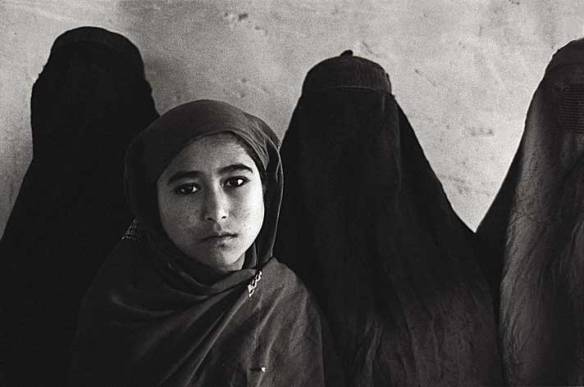
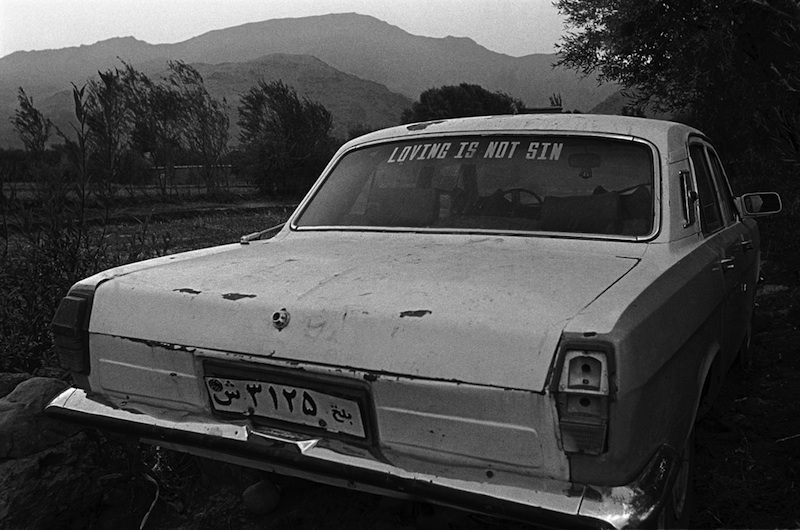
A worth reading book review, I Am Beggar Of The World, by Malik Kenan on collection of Afghan folk poetry, mostly composed by women expressing their repressed raw feelings.
You sold me to an old man, father.
May God destroy your home, I was your daughter.

Afghanistan is a nation with a fine poetical tradition reaching back centuries, a tradition in which high literary forms, especially those that derive from Persian or Arabic, are revered. I Am a Beggar of the World is, however, a collection of landays, folk rather than high poetry, an oral tradition created by and for mostly illiterate people, especially women. Traditionally, landays are sung aloud, often to the beat of a hand drum, which, along with other kinds of music, was banned by the Taliban.
A landay has only a few formal properties. Each has twenty-two syllables: nine in the first line, thirteen in the second. Sometimes they rhyme, but more often not. The landays in I Am a Beggar of the Worldwere collected by American poet and writer Eliza Griswold. In a 2012 essay in the New York Times, Griswold described the meaning and significance of the form:
Pashtun poetry has long been a form of rebellion for Afghan women, belying the notion that they are submissive or defeated. Landay means ‘short, poisonous snake’ in Pashto, a language spoken on both sides of the Afghanistan-Pakistan border. The word also refers to two-line folk poems that can be just as lethal. Funny, sexy, raging, tragic, landay are safe because they are collective. No single person writes a landay; a woman repeats one, shares one. It is hers and not hers. Although men do recite them, almost all are cast in the voices of women. ‘Landay belong to women’, Safia Siddiqi, a renowned Pashtun poet and former Afghan parliamentarian, said. ‘In Afghanistan, poetry is the women’s movement from the inside.’
Traditionally, landay have dealt with love and grief. They often railed against the bondage of forced marriage with wry, anatomical humor… But they have also taken on war, exile and Afghan independence with ferocity… More recently, landay have taken on the Russian occupation, the hypocrisy of the Taliban and the American military presence.
Like most folk literature, Griswold observes, ‘landay can be sorrowful or bawdy. Imagine the Wife of Bath riding through the Himalayan foothills and uttering landay so ribald that they curled the toes of her fellow travelers’.
The drones have come to the Afghan sky.
The mouths of our rockets will sound in reply.
Come to Guantánamo.
Follow the clang of my chains.
May God destroy the Taliban and end their wars.
They’ve made Afghan women widows and whores.
Wormwood grows on the one-eyed Mullah’s grave.
The Talib boys fight blindly on, believing he’s alive.
Hamid Karzai came to Kabul
to teach our girls to dress in Dollars.
I dream I am the president.
When I awake, I am the beggar of the world.
Griswold started collecting landays after learning the story of Rahila Muska, a young woman who, like many in rural Afghanistan, was forbidden from leaving her home. ‘Fearing that she’d be kidnapped or raped by warlords’, Griswold writes in an essay introducing the new collection, ‘her father pulled her out of school after the fifth grade. Poetry, which she learned from other women and on the radio, became her only form of education’:
These days, for women, poetry programs on the radio are one of the few permissible forms of access to the outside world. Such was the case for Rahila Muska, who learned about a women’s literary group called Mirman Baheer via the radio. The group meets in the capital of Kabul every Saturday afternoon; it also runs a phone hotline for girls from the provinces, like Muska, to call in with their own work or to talk to fellow poets. Muska, which means smile in Pashto, phoned in so frequently and showed such promise that she became the darling of the literary circle. She alluded to family problems that she refused to discuss.
One day in the spring of 2010, Muska phoned her fellow poets from a hospital bed in the southeastern city of Kandahar to say that she’d set herself on fire. She’d burned herself in protest. Her brothers had beaten her badly after discovering her writing poems. Poetry — especially love poetry — is forbidden to many of Afghanistan’s women: it implies dishonor and free will. Both are unsavory for women in traditional Afghan culture. Soon after, Muska died.
Griswold travelled to Afghanistan with the photographer Seamus Murphy on an assignment for theNew York Times Magazine ‘to piece together what I could of [Muska’s] brief life story’:
Finding Muska’s family seemed an impossible task — one dead teenage poet writing under the safety of a pseudonym in a war zone — but eventually, with the aid of a highly-effective Pashtun organization called Wadan, the Welfare Association for the Development of Afghanistan, we were able to locate her village and find her parents. Her real name, it turned out, was Zarmina, and her story was about more than poetry.
This was a love story gone awry. Engaged at an early age to her cousin, she’d been forbidden from marrying him, because after the recent death of his father, he couldn’t afford the volver, the bride price. Her love was doomed and her future uncertain; death became the one control she could assert over her life.
You sold me to an old man, father.
May God destroy your home, I was your daughter.
Although she didn’t write this poem, Rahila Muska often recited landays over the phone to the women of Mirman Baheer. This is common: of the tens of thousands of landays in circulation, the handful a woman remembers relate to her life. Landays survive because they belong to no one. Unlike her notebooks, the little poem couldn’t be ripped up and destroyed by Muska’s father.
http://kenanmalik.wordpress.com/2014/04/20/i-am-the-beggar-of-the-world/